
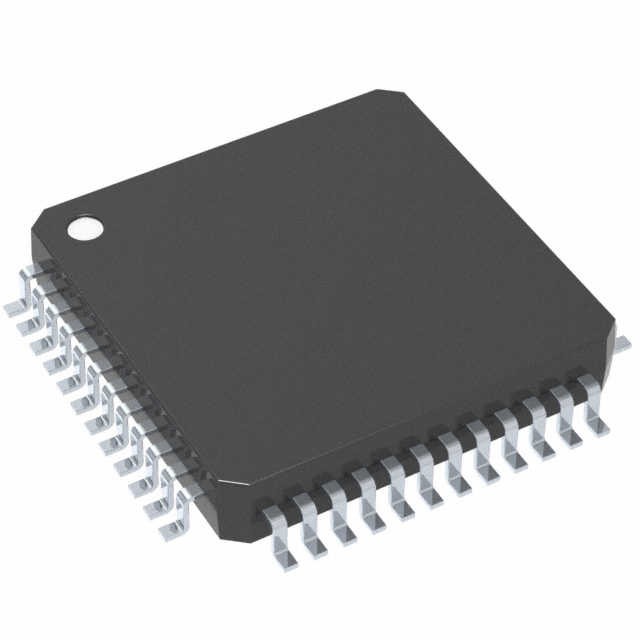
US Chip Export Controls: What Procurement Teams Must Know
Export restrictions on semiconductors are expanding and changing fast. If you're sourcing components globally, some of these rules directly affect how and where you can buy — and what documentation you need.
For most of the history of electronics procurement, trade compliance was something your legal or logistics team handled. You focused on price, availability, and lead time. The regulatory piece ran in the background.
That's no longer a safe assumption.
Starting in 2022, the US government began implementing a sweeping set of restrictions on the export of advanced semiconductors and chip-making equipment. The rules have expanded multiple times since then, and they've been followed by similar measures from allied governments in Europe and Asia. The practical effect is that the global chip supply chain has been carved up in ways that affect everyday procurement decisions — even for buyers who have never thought about export compliance before.
This article is not legal advice. For specific compliance questions, you need a qualified trade attorney. What this is, is a plain-language overview of what the rules say, who they affect, and what procurement professionals should be paying attention to.
The Background: Why These Rules Exist
The US export control regime for semiconductors rests on a long-standing concern about advanced technology reaching military or strategic adversaries. That concern isn't new — export controls on dual-use technology have existed for decades under the Export Administration Regulations (EAR), administered by the Commerce Department's Bureau of Industry and Security (BIS).
What changed in 2022 was the scope and specificity of the restrictions. Rather than targeting individual end-users on a case-by-case basis, the new rules set threshold-based restrictions on the chips themselves — based on performance specifications like compute density and memory bandwidth — and on the equipment used to manufacture them.
The stated goal was to slow down development of advanced AI and military capabilities in countries of concern, primarily China. The practical effect has been to create a two-track global chip market: one for countries and companies with access to cutting-edge technology, and one without.
Even if your company doesn't sell into restricted markets, these rules can affect your sourcing. Chips manufactured with controlled equipment, or components that fall under restricted Export Control Classification Numbers (ECCNs), may carry restrictions on how they can be used and where they can be re-exported.
What Gets Controlled and How
Under the EAR, products are classified using Export Control Classification Numbers (ECCNs). A chip's ECCN is determined by its technical specifications — things like clock speed, memory bandwidth, transistor density, and intended application.
Most commodity electronics — basic microcontrollers, standard logic chips, common analog components — fall under EAR99, which is a catch-all for items not covered by a specific ECCN. EAR99 items generally don't require export licenses for most destinations.
The chips that drew the most attention in the 2022 and subsequent rules are those used in advanced AI training and inference: high-end GPUs, AI accelerators, and the high-bandwidth memory that feeds them. These received specific performance thresholds above which export to certain destinations is restricted or prohibited without a license.
Key categories affected by recent rules:
Advanced AI chips: GPUs and accelerators above specified compute thresholds — the rules name performance metrics, not specific products, so new chips may fall under restrictions even if not listed by name
High-bandwidth memory (HBM): The memory technology used to feed AI accelerators
Semiconductor manufacturing equipment: Lithography machines, deposition tools, etching equipment — especially anything related to advanced node manufacturing
Certain FPGA products at higher performance tiers
Some specialized networking and switching chips used in large-scale compute infrastructure
For buyers of commodity components — the vast majority of electronic component procurement — these restrictions don't create direct licensing requirements. The impact is more indirect: restricted chips drive demand toward unrestricted alternatives, certain suppliers change their distribution policies, and the geopolitical environment creates documentation expectations that weren't there before.
The Entity List and What It Means for Buyers
Separate from the technical controls based on chip specifications, BIS maintains an Entity List — a list of specific companies, research institutions, and government entities that are subject to enhanced licensing requirements. Selling certain products to an entity list member, or facilitating such a sale, can create liability even if the product itself isn't normally controlled.
For procurement professionals, the Entity List matters in two directions. If your company sells products or technology that incorporates controlled components to an entity list member, you may have export obligations. But also: if you're sourcing from channels that involve entity list members — even indirectly — your supply chain may have compliance exposure.
The Entity List is updated regularly. BIS publishes additions and removals in the Federal Register, and the list is searchable on the BIS website. For any significant purchase involving a new supplier relationship in a covered region, a quick check against the list is a reasonable baseline step.
You don't need to be an exporter to have export compliance obligations. If your company re-exports components that were originally imported under specific conditions, or if your products incorporate controlled technology and are sold internationally, the EAR may apply to you.
Related: Why Certain Chips Are Always Out of Stock — And How to Source Them Without Overpaying — Trade restrictions are reshaping global component availability. Here's how shortage dynamics and export controls interact.
How Allied Country Rules Compound the Complexity
US export controls don't operate in isolation. Beginning in 2023, the Netherlands and Japan agreed to align their export control policies with US restrictions, particularly around semiconductor manufacturing equipment. The Netherlands controls ASML's EUV lithography machines — the most critical tool for advanced chip manufacturing. Japan controls several categories of deposition and etching equipment.
The practical effect is that advanced chip manufacturing is now restricted on a multilateral basis — not just US-controlled. A fab in a covered region that could previously source equipment from non-US suppliers now finds that those suppliers are also restricted.
For component buyers, the implication is longer-term: the gap between what can be manufactured in unrestricted supply chains and what can be built under restricted conditions will likely widen over time. Planning your component roadmap without accounting for this dynamic is planning with an important variable missing.
What This Means Specifically for Global Component Sourcing
If you're sourcing components globally — particularly if you buy from distributors in Asia — there are a few practical implications worth understanding.
Provenance documentation matters more. In a compliance-conscious environment, being able to document where a component came from and what channel it moved through is increasingly important. This is one more reason why chain-of-custody documentation from your distributor isn't optional paperwork — it's risk management.
Some distributors are changing their policies. Authorized distributors of restricted components have tightened their end-user documentation requirements. You may be asked to certify the intended end use of certain components in ways that weren't previously required.
Gray market channels carry new risks. In a market where certain chips are restricted, there's incentive to move controlled components through channels that obscure their origin or destination. Buying from opaque sources isn't just a quality risk — it can be a compliance risk.
Your customers may have questions. If you sell finished products internationally, your customers — particularly in defense, government, or regulated industries — may ask you to certify the origin and compliance status of components in your BOM. Being able to answer those questions requires having the documentation from your own suppliers.
Related: Counterfeit Electronic Components: How to Spot Them Before They Hit Your Production Line — Export restrictions make supply chain provenance more important than ever. Here's how to verify what you're actually buying.
What Procurement Teams Should Actually Do
The honest answer for most procurement professionals is: you don't need to become an export control expert. But you do need to know enough to know when to ask for help, and to have basic practices in place that reduce your exposure.
Know what's in your BOM. For your most performance-intensive chips — anything in the AI, FPGA, high-speed networking, or advanced memory category — it's worth understanding their ECCN classification. This isn't usually hard to find; most major manufacturers publish it or will provide it on request.
Document your supply chain. For any component that could plausibly fall under export controls, maintain records of where it was sourced, from whom, and with what documentation. This is good practice regardless of compliance obligations.
Qualify your distributors on compliance. Add export compliance practices to your supplier qualification criteria. A distributor who can't tell you anything about their compliance program is a distributor who can create problems for you downstream.
Watch for BIS updates. Export control rules in this space are changing faster than most regulatory areas. Setting up a basic alert for BIS Federal Register notices takes ten minutes and keeps you from being surprised by rule changes that affect your supply chain.
Engage your legal team for the hard questions. If you're sourcing components that are in the advanced compute/AI category, or if you have significant international sales exposure, a qualified trade compliance attorney is worth consulting. The rules are genuinely complex, and the penalties for violations are serious.
The Bigger Picture
Export controls on semiconductors represent a fundamental shift in how the global chip industry operates. For most of the past 40 years, the semiconductor supply chain was organized around economic efficiency: parts were designed where talent was concentrated, manufactured where costs were lowest, and shipped wherever demand existed.
That model is being restructured around national security and geopolitical alignment. It won't happen overnight, and the vast majority of component categories won't be directly affected. But the direction of travel is clear, and procurement organizations that plan as if the pre-2022 supply chain model will simply continue are setting themselves up for surprises.
Understanding the regulatory environment isn't just a compliance exercise. It's context for making better sourcing decisions — knowing which supply routes are stable, which are at risk, and where documentation requirements are heading.
About Joydo Electronics
Joydo Electronics is a global electronic component distributor with sourcing capabilities across Asia, Europe, and North America. We provide full chain-of-custody documentation with every shipment and work with compliance-conscious buyers to ensure their sourcing meets current regulatory requirements. Visit joydo-ele.com to learn more or request a quote.