
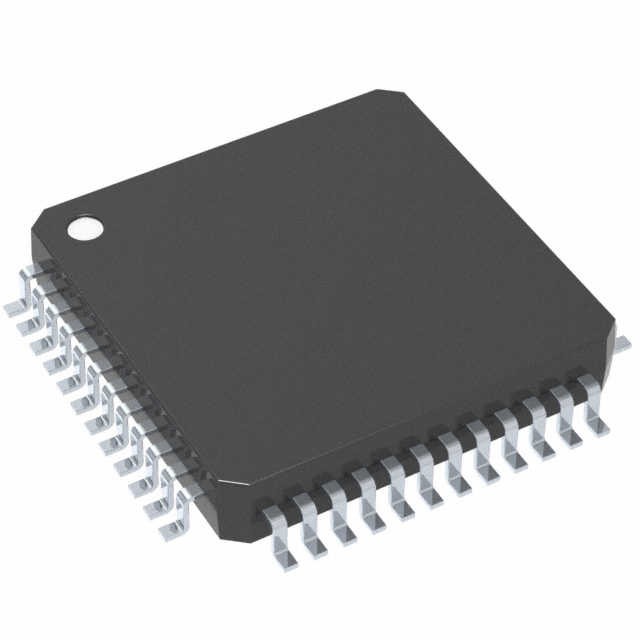
Top 10 Chip Procurement Traps in 2026
The year 2026 marks a significant change in the way chips will be purchased, and it also brings very high prices for chips, as covered elsewhere in a related article about increasing prices of DDR4 chips.
Some of the largest chip manufacturers are actively decreasing the number of general-purpose chips produced to put more focus on those producing higher profits or higher type of chips being made. In addition, Infineon will increase its prices on power switches and associated chips beginning on April 1 due to low stock levels of chips and price increases for items used to produce these chips.

Costs of NAND flash memory are at their highest levels yet, up 80% - 90% in Q1 2021 and with demand for high-performance chips such as HBM in data-centers diverting wafer capacity away from DDR4 / DDR5 and other standard types of chips. Prices for memory, power supply chips and NAND flash had reached all-time low levels in 2020 due to overproduction worldwide; however, beginning in 2021 the prices for memory, power supply chips and NAND flash began to surge dramatically, with many DDR5 server-type memory pricing near $500 per module.
Due to these changes, the prevalence of procurement traps has grown for buyers both large and small, and if you fall victim to these traps you will lose time, money, and trust in the supply chain. For the team at Joydo Electronics, a premier chip procurement source with extensive chip database resources, these price increases indicate that now is the time to avoid the most common pitfalls; therefore, this article includes the 10 leading procurement traps expected in 2026, as well as tips on how to protect your procurement decisions from this type of volatility.
Mislabeled Products and Incorrect Chip Information
What Type of Trap Is This?
Some disreputable sellers provide incorrect information related to chips in order to receive a higher price. These sellers tend to take older or lower-quality chips, alter their labeling in order to represent them as being a newer, better-performing chip. For example, a seller could provide a DDR4 chip with a label that states it's a DDR5 chip, could modify an existing power chip and represent it as a new Infineon part, or even sell a fake memory chip with a bogus PCB and materials that were not produced in accordance with manufacturer's specifications. This deceit will likely become increasingly common through 2026 due to the high demand for AI related chips like HBM3e and limited supply of power chips. In addition, sellers are known to use "duplicate serial numbers" for an old chip, selling the same serial number to more than one buyer. If the buyer doesn't thoroughly check the information, they could receive a product that does not function as expected.
How Joydo Helps You Avoid It
Joydo Electronics provides users with a chip procurement platform that is filled with real, authentic information on chips. Our database contains data on not just memory chips, but also power chips; NAND Flash memory, HBM; and many of the other types of chips that are commonly used. With Joydo you can quickly access all of the actual specifications for a specific chip of any one of the types listed above. Through our data we also contain data about the electronic component manufacturer so that you can quickly verify the seller's representation of said item as being what it actually is. With Joydo, you will be able to purchase an authentic component based on accurately and completely verified data.
Purchasing Chips in Bulk to Keep Cheap
Chips are getting more expensive fast, especially not just the highest quality memory chips such as DDR5 and HBM3e. For example, power chip prices from manufacturers like Infineon will start increasing in April and NAND flash memory prices have increased almost 90% in Q1 of 2026. A lot of people are panicking and buying huge amounts of chips to hold their costs down. However, this is risky. Chips have a short product cycle. The DDR5 chips you purchase today may be obsolete because HBM4, which is expected to be in full production during the second half of 2026, will eventually replace them. If you have purchased excess power chips there is a chance your excess inventory cannot be used in new equipment or will have to be scrapped when new equipment is introduced. Furthermore, if you purchased all these components at a premium price and the market drops after the introduction of new wafer fabs in 2027, you will have lost money. Small businesses are affected the hardest since they typically do not have available cash to invest in large quantities of inventory.
Relying on One Supplier
Many purchasers think that using a sole supplier is a safe choice, especially if they have an excellent working relationship with them. However, in 2026, there are many challenges to the world-wide chip supply chain that could affect a supplier's ability to satisfy demand. If there are challenges to a supplier's ability to deliver chips, and there are ongoing global production cuts from the two largest semiconductor suppliers, both of which are focusing on HBM and DDR5 chips; and Infineon is experiencing a constrained power semiconductor supply chain, purchasers that work exclusively with any one of these suppliers may find themselves completely out of a variety of different types of chips and unable to produce product to supply their customers.
Missing the Best Time to Lock Prices in
Chip prices in are clearly trending upward in early half of 2026 and downward in late 2026. A majority of buyers wait until the last minute to lock in low prices and end up paying far higher prices than they would have if they had locked-in at an earlier date, or they make an early purchase without knowing how the trend was going to develop. These buyers are missing out on thousands of dollars due to common traps.
Buying Cheap, Low-Quality Chips
To save money on chips some buyers are opting for the cheapest possible chip purchases available, which can be low-cost but also have the potential to be old, reworked, or counterfeit chips. For example, a potential source of low-cost chips would be via reworked Infienon power chips, for example, fake chipboard for memory chips and counterfeit PCB's with fake parts, as well as counterfeit, low-cost NAND flash that will fail quickly - these types of chips may be unstable, can break easily, and can lead to complete failure of a device, such as using an counterfeit power chip that causes a device to overheat, would end up costing money to re-purchase and potentially damage the manufacturer's reputation.
The "Adequate Inventory" fallacy
Many purchasers assume that there will be sufficient stock of all chip types, including the lower chip type products. The perception of adequate stock is true for all chip types of which the key chips and high-end HBM have limited stock on the part of suppliers. An example is NAND flash that is experiencing price increases but limited stock because factories have reduced their volume. There are still shortages of high-end chips, and some power chips are receiving notices advising of possible delays. The perceived adequate stock position created by buyers may result in delayed purchasing and lead to stock outs of all chip types in the future.
Being too confident about negotiated chip prices
Many purchasers believe they can low-price negotiate until eternity. However, the costs of producing chips will be increasing significantly in all segments due to rising raw material/labor costs and limited supply of key components. For example, Infineon is already forecasting price increases for power chip supplies; while memory chip companies are having some of the same issues with increased wafer costs. Therefore, a low price that you have negotiated for today does not guarantee it will be sustainable, i.e., suppliers could increase the price in the future or reduce quality to save costs. As a result, these purchasers could incur unanticipated expense and receive substandard chips.
Ignoring Compliance Risks
Chip policy will continue to evolve in the U.S. and other regions, and many products will be subject to export restrictions. Buyers should understand their obligations to remain compliant with the laws regarding these chips and not purchase illegitimate products. Violation of these laws can lead to fines, lawsuits or even the closure of the buyer's company. Unfortunately, many small businesses are unaware of these risks and fall victim to these types of traps.
Wasting Money on Unwanted Chips
Many customers purchase more chips than required, or purchase chips that are not compatible with their products. This can happen with any chip type, including memory chips. Unused chips account for 20% to 30% of the total stock of many businesses. In the case of Infineon power chips, some customers will buy a large quantity of the chips for their new product, only to find out that the chips are no longer compatible with the design of that product. Some customers will purchase a large amount of NAND flash chips, but by the time they are ready to use them, the storage chip technology has already advanced to a point that the old storage chips are no longer usable and will be considered out-of-date. Not only does this waste money, but it also takes up valuable storage space. Small businesses are particularly hard hit, as they can ill-afford to waste money on any kind of unused chips.
Joydo Electronics has the solution to chip trap problems to avoid easily.
With rising prices and limited inventory in various integrated circuit (IC) categories - memory ICs, power ICs, NAND flash memory ICs, HBM ICs, etc. - you may be surprised to learn there are several common chip traps you could fall into. Fortunately, Joydo Electronics' chip sourcing/platform solution provider is the best partner for you. Her massive amount of chip data includes all the major chip categories as well as some of the best chip manufacturers including Infineon, Samsung and SK Hynix. Our services include: Investigating chip information (including counterfeit detection), Tracking the Price movement of chips in all categories, Partnering you with Verified Chip Suppliers for every chip category, and Helping you make wise purchasing decisions whether you are a large or small company. No matter what type of chip you need Joydo can provide a secure, efficient and cost-effective sourcing platform for your chip procurement needs. To avoid falling into traps and to take control of your chip purchases, go to our platform now.