
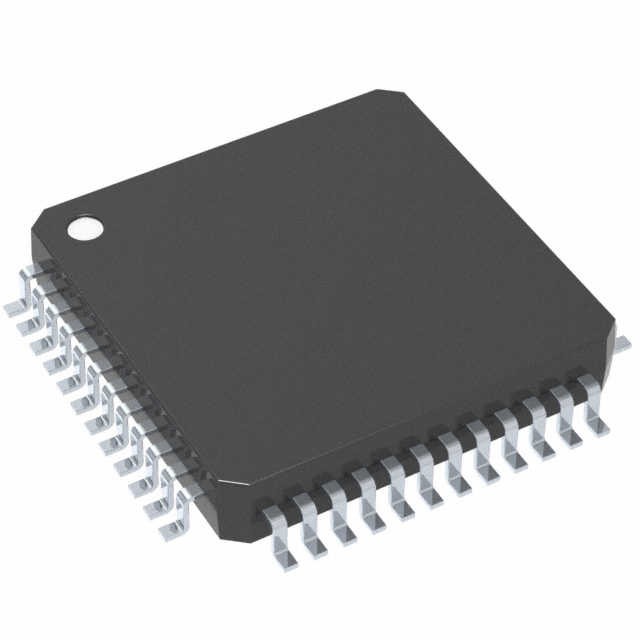
How IO-Link Chips Drive the Industrial Data Revolution
Traditional industrial sensors and actuators usually use simple switching signals (ON/OFF) or limited 4-20mA analog communication. This limited, one-way communication method creates a vast data gap. This means Operations staff cannot access real-time sensorhealth. They cannot see calibration records. They also cannot remotely change parameters during operation. So, this "data silo" problem makes device diagnostics hard. It drives up the cost of unplanned downtime. It also severely limits production line flexibility. In short, it prevents factories from reaching their full digital manufacturing potential.
The best solution to this industrial data gap is IO-Link. IO-Link is a global standard, point-to-point communication technology. It is made to easily connect sensors and actuators to the IO-Link master system. It is not like complex industrial Ethernet fieldbuses. IO-Link transmits digital signals over standard, plain three- or five-wire cables. It keeps the wiring simplicity of traditional industrial I/O. But it also adds full two-way data transfer. This standardized digital interface allows devices to transmit detailed diagnostic data. It also lets them receive remote configuration parameters from the controller. This power upgrades simple I/O devices into real smart sensor technology. It forms the digital foundation for complete factory digitalization.

IO-Link System Architecture and Chip-Level Implementation
A complete IO-Link system architecture has two core components: the Master and the Device. Each part relies on specific electronic silicon to meet its complex communication and strength needs.
The Role of the IO-Link Master Chip
The IO-Link master acts as the main gateway between the factory control layer and the field devices (sensors/actuators). Its main function is to package the raw IO-Link data from the field. Then, it forwards it to higher-level fieldbuses (like Profinet or EtherCAT) or directly to the Programmable Logic Controller (PLC). At the chip level, the IO-Link master needs highly integrated, specialized silicon.
These master chips have physical layer transceivers for multiple ports. These manage the communication baud rates and timing. They are also responsible for handling the complex frame structure of the IO-Link communication protocol. More advanced IO-Link master chips often have a microcontroller (MCU) core or a dedicated coprocessor. This design allows the chip to offload the main PLC. It does this by locally managing complex tasks, such as device configuration and advanced fault detection. This chip-level integration is the key to making sure all ports work together. It also guarantees data reliability. Most importantly, the chip must be very strong. It must be able to handle the electromagnetic interference and high voltage surges that are part of industrial environments. For this reason, integrated protection circuits and advanced power management are basic parts of IO-Link master chip design.
Design Requirements for the IO-Link Device Chip
The IO-Link device chip is, at its heart, the engine that drives smart sensor technology. These chips are put deep inside the sensor or actuator itself. Their function is to change internal analog or digital signals into the standardized IO-Link data packet format. Designing a standard IO-Link device chip means balancing three key, and often competing, requirements: low power consumption, minimal physical size, and good thermal management.
These components are commonly called the IO-Link transceiver chip. They manage the physical layer signal driving and reception. Very importantly, the IO-Link transceiver chip must have a strong level shifter. This is needed to make sure there is reliable communication between the sensor’s low-voltage logic (e.g., 3.3V or 5V) and the IO-Link port’s 24V industrial voltage. Also, to allow device-level parameterization and diagnostics, the IO-Link transceiver chip is usually paired with a low-power MCU. This MCU runs the device's firmware. It manages sensor data. It also stores parameter sets. This highly integrated single-chip or dual-chip approach is the technical way to guarantee the IO-Link device’s needed small size and high operational reliability.

Bidirectional Communication and Chip-Level Intelligence
The core strength of the IO-Link communication protocol is its two-way nature. This power greatly expands the function of traditional sensors. It changes them from simple data points into intelligent, data-generating nodes.
Implementing Remote Parameterization
In old systems, changing a sensor's setting needs direct physical interaction. This usually means using hard-to-use potentiometers or dip switches. IO-Link stops this. It allows easy remote parameterization and diagnostics. The control system can send Service Data Units (SDUs) through the IO-Link master directly to the IO-Link device. For example, an operator can remotely adjust the working threshold of a distance sensor. They can also change the filtering settings of a color sensor from a central control room.
At the chip level, the MCU manages this function using an Object Dictionary. The IO-Link transceiver chip handles the physical transport of the data frames. At the same time, the MCU parses these frames. It writes the new configuration values to non-volatile memory (like EEPROM). And it immediately activates the new sensor behavior. This power also supports "plug-and-play" device replacement. When a sensor fails, the IO-Link master can automatically download the configuration parameters of the old device to the new replacement. This greatly reduces system downtime after an equipment failure.
The Flow of Enhanced Diagnostics Data
IO-Link transmits not only process data (such as distance or temperature) but also a lot of diagnostic and service data. This extra data stream is very important for supporting the predictive maintenance powers promised by Industry 4.0. For instance, an IO-Link device can actively report if its internal temperature is too high. It can report if its supply voltage is changing, or even the amount of dirt on its optical lens.
The IO-Link transceiver chip is responsible for sending this important diagnostic information to the IO-Link master as asynchronous Events. These events are processed separately from the regular process data. This makes sure that important fault information is identified immediately. This continuous health monitoring allows factories to shift from a reactive maintenance style ("fix it when it breaks") to a proactive one. For example, if a valve actuator reports its switching cycle count has reached 90% of its expected lifespan, the system can schedule maintenance early. This avoids costly unplanned downtime. This deep diagnostics power is the basic difference that sets IO-Link apart from traditional I/O.
The Long-Term Value of IO-Link: IIoT and Data Consolidation
The value of IO-Link is much more than simplified connectivity. Its true long-term impact is in making a unified, reliable data entry point for the Industrial Internet of Things (IIoT).
Data Standardization through a Unified Interface
In large manufacturing plants, it is common for sensors from different manufacturers to use different, often private, protocols and connectors. IO-Link solves this complexity with its standardized digital interface. All IO-Link compatible devices, no matter the brand or function, use the same M12 or M8 connectors. They also follow the same IO-Link communication protocol.
This standardization greatly simplifies inventory management and system integration. For IO-Link master chip manufacturers, this means they can provide a universal hardware platform. This platform is compatible with thousands of devices on the market. This unity is the foundation for data working together. It allows high-level software to easily parse and use data from different devices. This, in turn, allows true cross-platform data analysis. This chip-level and protocol-level uniformity is an essential need for any digital factory.
Joydo has a strict procedure for acquiring chips. The unified IO-Link hardware platform lowers overall lifecycle costs, increases deployment efficiency, and streamlines and optimizes the certification, maintenance, and procurement processes.
The Data Path from Edge to Cloud
The IO-Link system architecture is a perfect fit to support the data path from the edge device to the cloud. The IO-Link device collects the raw data at the source. The IO-Link master is a highly integrated gateway built around specialized chips. It does initial processing at the edge. It can then upload the collected and filtered data using industrial Ethernet protocols (like OPC UA) to the cloud or an Enterprise Resource Planning (ERP) system.
This architecture maximizes the value of the smart sensor technology data. For example, vibration data reported by a sensor can be used to train a machine learning model. This model can predict the remaining useful life of a motor bearing. This predictive maintenance model relies entirely on the accurate, continuous, and digitized data stream that IO-Link provides. In this way, IO-Link chips serve not just as communication devices. They act as key data processors and gatekeepers in the IIoT data chain.
Conclusion
IO-Link is rapidly becoming a basic requirement for industrial automation. It is moving far past its old status as an optional feature. Through long innovation in the IO-Link master and IO-Link transceiver chip hardware, it has successfully changed normal sensors into highly intelligent digital assets. It provides key remote parameterization and diagnostics powers. This allows factories to greatly boost operational efficiency, reduce downtime, and achieve the flexibility and predictive maintenance needed for modern digital manufacturing.
For the electronic chip industry, the clear future trend is toward more integration. This means combining the physical layer transceiver, the strong 24V interface, and a powerful IO-Link communication protocol stack and MCU into a single-chip solution. This is the ultimate IO-Link transceiver chip. This development will continue to drive down the cost. It will also improve the performance of the IO-Link device. Also, as the demand for more complex and higher-speed data grows, the bandwidth and function of IO-Link itself will continue to change. Focusing on delivering highly strong, low-power, and highly integrated IO-Link chip solutions is the key for semiconductor companies. It is how they can capture the huge market opportunity in the ongoing industrial automation upgrade.