
A Complete Buyer’s Handbook to Genuine vs. Refurbished vs. Counterfeit Chips
Electronic component buyers must know the difference between genuine, refurbished, and counterfeit semiconductor devices in order to avoid delays on projects due to lack of availability or substandard quality and protect their reputation from being damaged due to counterfeit products. By knowing what these types of chips are along the complex semiconductor chip supply chain, purchasers can make better purchasing decisions, optimize the costs, and ensure the reliability of the end product.
Basic Definition of Genuine, Refurbished and Counterfeit Chips
Defining the proven types of chips are imperative to reducing confusion relating to procurement and properly coordinating with engineering teams. Each of the three types of chips are required in different situations and present different risks for computer manufacturers.
Genuine Chip (Original Chip)
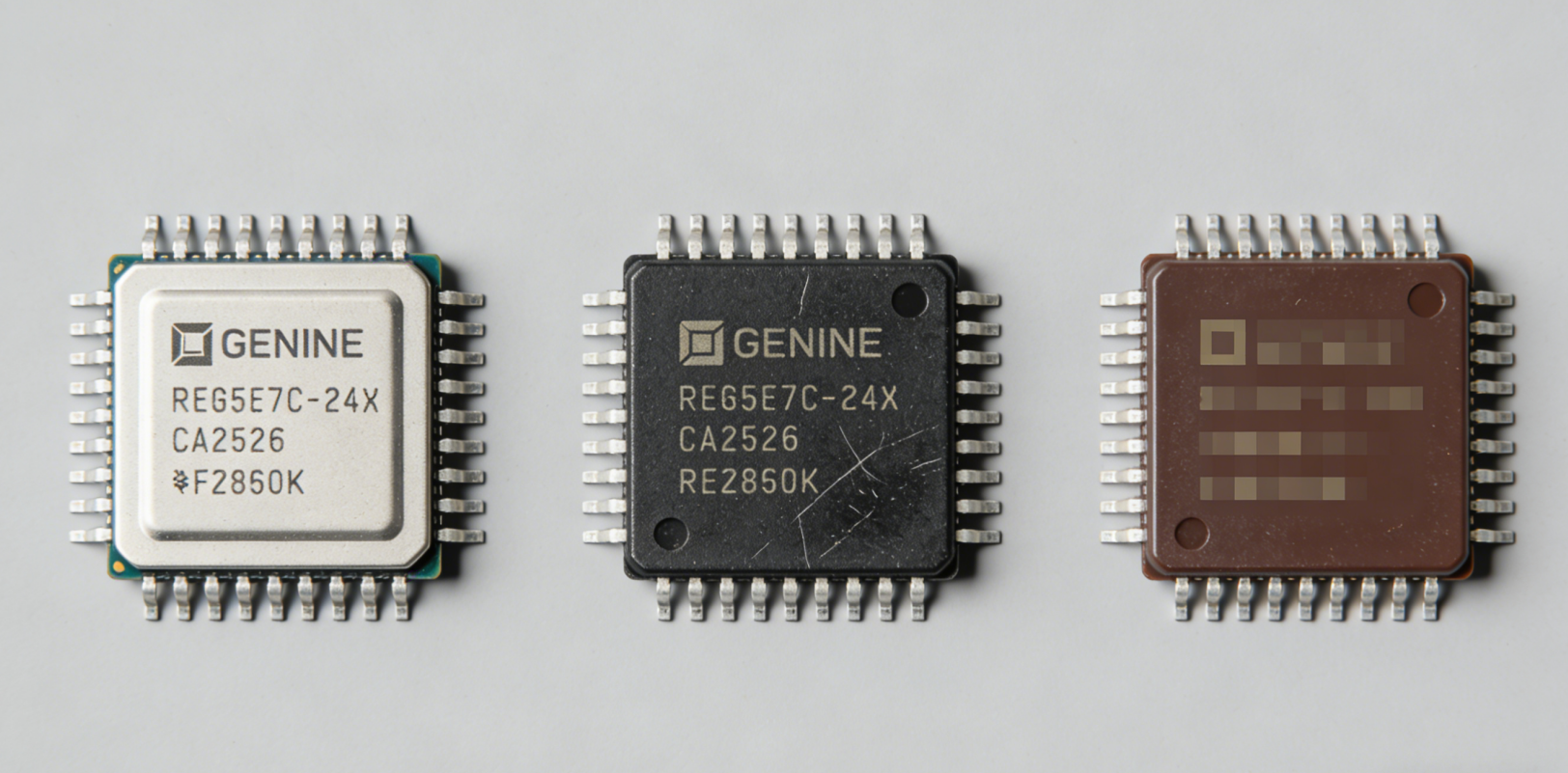
Genuine chips are manufactured by the manufacturer itself (such as STMicroelectronics) or by a recognized foundry and are produced in compliance with strict quality control processes and datasheet specifications. These chips come with all packaging, documentation and after sales service, making them most suited for critical application environments. Key indicators of a Genuine chip are intact and sealed packaging, clear labeling on the chips, and matching the batch number used on the chip's packaging and the part number on the chips. To avoid counterfeit chips, it is always best to buy directly from authorized distributors.
A great example is Joydo Electronics, which carries chips from only authorized manufacturers, so there is no concern of getting substandard chips versus Genuine ones.
Refurbished Chips
Refurbished chips are electronic components that were previously used, defective, repaired, cleaned, and tested to meet minimum specifications for operation. Suppliers are required to inform you of the status of refurbished chips before selling them; therefore, they are generally less expensive than new parts and can be purchased and used in all types of applications. Be mindful that you may experience reduced performance and hidden defects from refurbished chips. Always get the test report from your supplier and ask for the warranty period for refurbished chips.
Counterfeit Chips
Counterfeit or imitation chips are illegal copies of manufacturer original parts, have not been manufactured to the manufacturer's standards, pose safety, legal, and reputational threats, and are typically sold at an unreasonably low price. Red flags for counterfeit chips: poor quality packaging, unsharp logo, batch information that is not consistent. Counterfeit chips should be avoided at all costs.
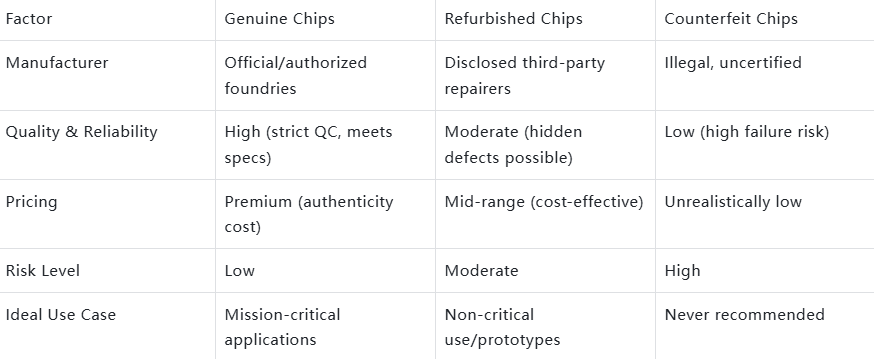
Key Differences:
The image below simplifies the comparison process for purchasing decisions.
Procurement Best Practices to Mitigate Risks
Work with Honorable, Ethical Suppliers
Suppliers like Joydo Electronics provide only products purchased from authorized distribution sources and can confirm chain-of-custody tracing of each product. Request to review an authorization certificate, batch reporting, and testing documentation from your supplier to verify that products are genuine. Avoid suppliers offering products with vague descriptions of their products, who have listed prices that are below other suppliers or who have limited contact information.
Prioritize Total Cost of Ownership
While counterfeit chips may seem like a cost-saving option, they often lead to costly delays and rework. Joydo Electronics advises buyers to focus on total cost of ownership—opting for genuine or certified refurbished chips that reduce long-term risks and ensure project timelines are met.
At Joydo Electronics, we are dedicated to helping buyers navigate the complex semiconductor supply chain with confidence. By understanding the differences between genuine, refurbished, and counterfeit chips and following these best practices, buyers can protect their projects, their reputation, and their bottom line.